
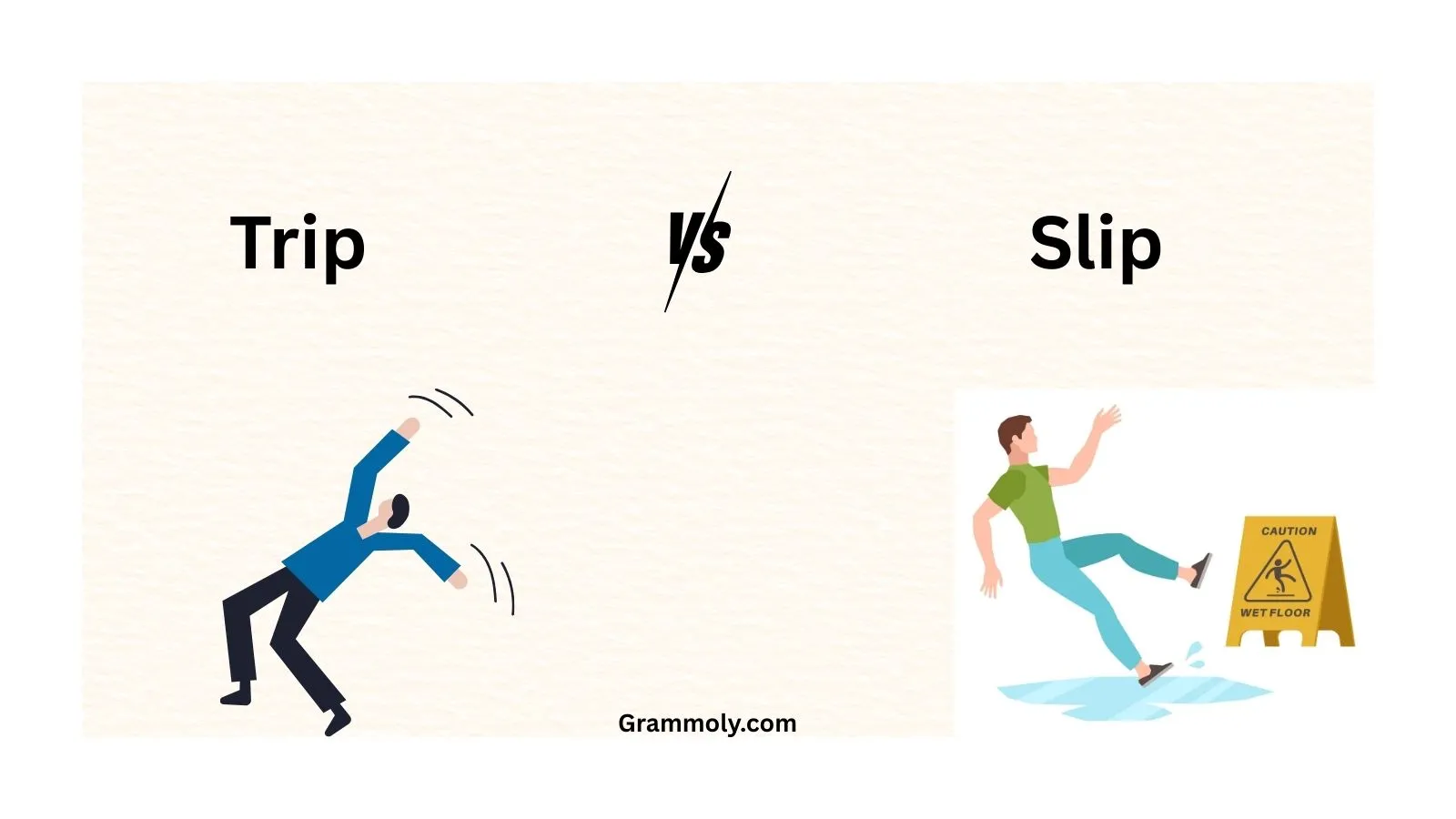
Understanding the slip or trip difference is important for clear communication, especially in safety discussions and accident reports. Many people use these terms interchangeably, but they describe two different situations. A slip accident usually occurs when a person loses traction on a wet or slippery surface. In contrast, a trip hazard happens when the foot strikes an obstacle or uneven ground while walking.
Recognizing these distinctions helps explain how workplace safety incidents occur and how they can be prevented.
|See also: Chris vs chriss
Learning the difference between slip and trip also improves accuracy in safety training and reports. By understanding common slip trip fall hazards, individuals and organizations can take better steps to reduce accidents and maintain safer environments.
What Does Slip Mean?
The word slip refers to losing balance because the foot slides on a surface with little friction. This usually happens when the ground is wet, oily, icy, or polished.
Common Situations Where Slips Occur
Examples:
- Walking on a wet floor
- Stepping on ice or snow
- Walking on a freshly mopped surface
- Standing on a smooth or polished floor
In these situations, the foot slides unexpectedly, causing the person to lose balance.
|See more: Vision or eyesight
Example
- She slipped on the wet kitchen floor.
- He almost slipped while walking on icy pavement.
- Workers must wear non-slip shoes to prevent accidents.
These examples help show how the word slip is used in everyday English.
What Does Trip Mean?
A trip occurs when the foot strikes an object or uneven surface while walking. Instead of sliding like a slip, the foot gets blocked or caught, causing the person to stumble or fall.
Common Causes of Trips
Trips often happen because of:
- Uneven sidewalks
- Loose cables or wires
- Objects left on the floor
- Broken pavement
- Poor lighting that hides obstacles
In these cases, the person’s foot hits something unexpectedly, interrupting the natural walking motion.
Example Sentences
- He tripped over a loose wire in the hallway.
- She tripped on the uneven sidewalk.
- Someone left a box in the walkway and people kept tripping over it.
These examples clearly show how the word trip is used differently from slip.
Slip or Trip Difference Explained
Understanding the slip or trip difference becomes easier when we compare the causes and movements involved.
| Aspect | Slip | Trip |
|---|---|---|
| Main Cause | Loss of traction | Foot hits an object |
| Movement | Foot slides forward | Foot stops suddenly |
| Common Hazards | Wet floors, ice | Obstacles, uneven surfaces |
| Typical Result | Loss of balance | Stumbling or falling forward |
In simple terms:
- A slip happens because the surface is too slippery.
- A trip happens because something blocks the foot.
Recognizing the slip or trip difference helps people describe accidents accurately.
Why the Slip or Trip Difference Matters
The slip or trip difference is more important than many people think. In professional settings such as workplaces, hospitals, and public areas, safety reports must clearly explain how an accident occurred.
Workplace Safety
Example:
- Slips may require better floor cleaning procedures.
- Trips may require removing obstacles or fixing uneven flooring.
Legal and Insurance Reports
In legal cases or insurance claims, the slip or trip difference helps determine the cause of an injury. Clear descriptions allow investigators to understand what hazard caused the accident.
Clear Communication
Using the correct term ensures that readers or listeners understand the situation correctly. This improves both safety awareness and communication.
Common Mistakes When Using Slip and Trip
Common mistakes:
Using “Slip” Instead of “Trip”
Example:
- “He slipped on the stairs because of a loose step.”
Correct version:
- “He tripped on the stairs because of a loose step.”
In this case, the problem was an obstacle, not a slippery surface.
Using “Trip” Instead of “Slip”
Example:
- “She tripped on the wet floor.”
Correct version:
- “She slipped on the wet floor.”
Here the surface caused sliding, which means it was a slip.
Understanding the slip or trip difference prevents these errors.
Everyday Situations Where the Difference Appears
The slip or trip difference appears in many daily situations.
In Public Places
Shopping malls, restaurants, and sidewalks often report accidents. Knowing whether someone slipped or tripped helps determine the hazard.
In Workplace Safety Training
Many workplaces teach employees about slip and trip hazards to prevent injuries.
Common examples :
- Wet floors
- Loose carpets
- Electrical cables
- Broken stairs
Training workers about the slip or trip difference helps reduce accidents.
In Health and Safety Reports
Safety inspectors often classify incidents into categories such as:
- Slip accidents
- Trip accidents
- Fall accidents
Accurate reporting improves safety planning.
Tips to Prevent Slips and Trips
Understanding the slip or trip difference also helps prevent accidents.
Preventing Slips
You can reduce slip risks by:
- Cleaning spills immediately
- Using non-slip mats
- Wearing shoes with good traction
- Placing warning signs for wet floors
Preventing Trips
Trips can be prevented by:
- Keeping walkways clear
- Fixing uneven flooring
- Securing loose cables
- Improving lighting in hallways
By addressing both hazards, workplaces and homes can become much safer.
Slip, Trip, and Fall: How They Connect
Although slips and trips are different, they often lead to falls.
A fall is the final result when someone loses balance. It can occur because of:
- A slip on a slippery surface
- A trip over an obstacle
- Loss of balance on stairs
Therefore, safety experts often discuss slips, trips, and falls together.
Understanding the slip or trip difference helps identify the first cause of a fall accident.
Why Correct Word Usage Matters
Using the correct words improves professional writing and credibility. When writers clearly explain the slip or trip difference, readers understand the situation quickly.
Accurate word choice is especially important in:
- Workplace safety reports
- Legal documents
- Insurance claims
- News articles
- Educational materials
Clear language helps avoid misunderstandings and makes information more reliable.
FAQs
Q: What is the main difference between a slip and a trip?
A: A slip happens when your foot loses traction on a slippery surface, while a trip occurs when your foot hits an obstacle or uneven ground.
Q: Did Arthur slip or trip?
A: It depends on the situation—Arthur slipped if the surface was slippery, but tripped if his foot hit something.
Q: What is the difference between slipping and tripping?
A: Slipping involves sliding on a smooth or wet surface, while tripping happens when something blocks the foot during walking.
Q: How much compensation do you get for a trip or fall?
A: Compensation varies depending on injury severity, medical costs, lost income, and legal factors in the case.
Q: What are signs of a good settlement offer?
A: A good settlement usually covers medical bills, lost wages, pain, and future expenses related to the injury.
Q: What is the hardest injury to prove?
A: Soft tissue injuries are often the hardest to prove because they may not appear clearly on medical scans.
Conclusion
Understanding the slip or trip difference is essential for clear communication and safety awareness. A slip occurs when a person loses traction and the foot slides on a slippery surface. In contrast, a trip happens when the foot strikes an obstacle or uneven surface, interrupting the walking motion.
Although these terms are sometimes used interchangeably, they describe different situations. Recognizing the slip or trip difference helps people report accidents accurately, improve workplace safety, and communicate more clearly in both professional and everyday contexts.