
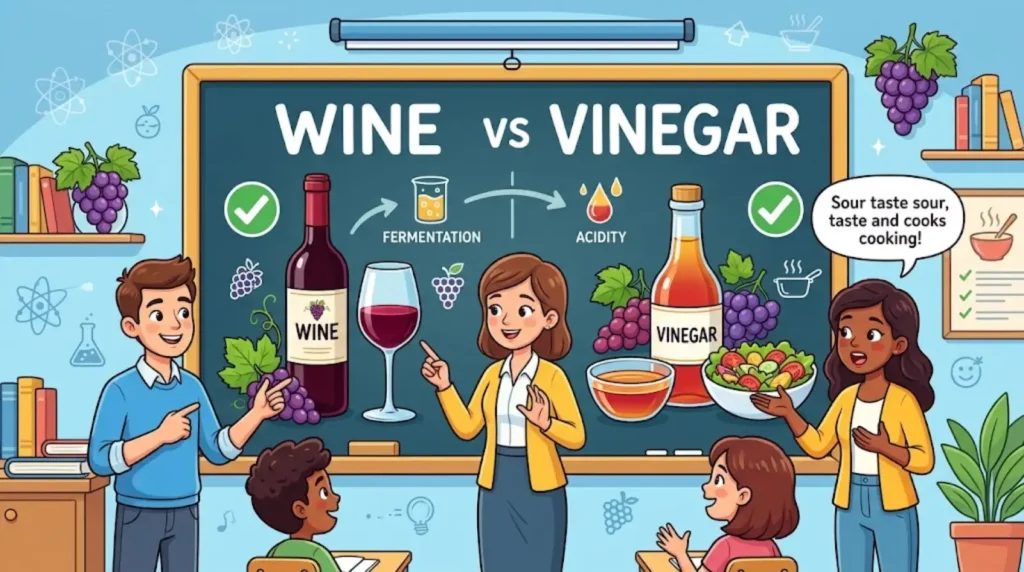
Wine vs vinegar: Wine is an alcoholic drink made from fermented grapes or other fruits, while vinegar is a sour liquid made through further fermentation. Although both can come from grapes, they have different tastes, uses, and properties.
Imagine preparing dinner for your family. A recipe calls for red wine to add depth to a pasta sauce, but you accidentally reach for red wine vinegar. Both bottles have similar colors, yet the results can taste completely different. The mistake might turn a rich, balanced sauce into something unexpectedly sour.
So, what separates wine from vinegar? The answer lies in their fermentation process, acidity, flavor, and purpose. Wine is commonly enjoyed as a beverage or used in cooking. Vinegar, on the other hand, is mainly used for seasoning, pickling, marinades, and sauces.
Understanding wine vs vinegar helps you choose the right ingredient for recipes and recognize why these liquids behave differently in the kitchen. It also clears up confusion about red wine, white wine, wine vinegar, and other grape-based products.
Table of Contents
- Wine vs Vinegar: Quick Answer
- What Is Vinegar?
- What Is Wine?
- The Origin and History of Wine and Vinegar
- British English vs American English
- Which One Should You Use?
- Common Mistakes
- Everyday Examples
- Usage Trends and Popularity
- Wine vs Vinegar Comparison Table
- Special Rules and Important Uses
- Frequently Asked Questions
- Conclusion
Wine vs Vinegar: Quick Answer
Wine is a fermented beverage made mainly from grapes. During fermentation, yeast converts the fruit’s natural sugars into alcohol.
Vinegar is a sour liquid produced when acetic acid bacteria convert alcohol into acetic acid under suitable conditions. It may be made from wine, cider, rice, or other alcohol-containing materials.
The easiest way to remember the difference: Wine is generally valued for its alcoholic content and flavor, while vinegar is valued for its acidity and sour taste.
Examples:
- Wine: She added white wine to the sauce.
- Vinegar: He poured red wine vinegar over the salad.
What Is Wine?
Wine is a drink produced by fermenting grapes or grape juice. Yeast consumes natural sugars and produces alcohol, along with compounds that create wine’s aroma and flavor.
Winemakers use different grape varieties, fermentation methods, and aging techniques to produce different styles. As a result, wine can taste fruity, dry, sweet, earthy, or complex.
Types of Wine
Common varieties include:
- Red wine: Made from dark-colored grapes, usually fermented with their skins.
- White wine: Usually made from grape juice fermented without prolonged contact with grape skins.
- Rosé wine: Gets its pink color from limited contact with dark grape skins or other production methods.
- Sparkling wine: Contains bubbles from dissolved carbon dioxide.
- Dessert wine: Often sweeter than ordinary table wine.
Examples of Wine in Sentences
- My uncle served red wine with dinner.
- The chef added white wine to the mushroom sauce.
- This wine has a fruity aroma.
- The recipe recommends dry wine instead of sweet wine.
Wine can contribute acidity, aroma, and depth to cooking. However, its alcohol content and flavor depend on the particular product and preparation method.
What Is Vinegar?
Vinegar is a sour liquid containing acetic acid. Producers commonly make it by allowing acetic acid bacteria to convert alcohol into acetic acid in the presence of oxygen.
Vinegar can come from several starting materials. These include wine, apples, rice, malt, and other fermented products.
Unlike wine, vinegar is usually used in small amounts to add sharpness, balance flavors, preserve certain foods, or create dressings.
Types of Vinegar
Here are some popular varieties:
- Red wine vinegar: Made from red wine and known for its sharp, tangy flavor.
- White wine vinegar: Made from white wine and often used in light sauces and dressings.
- Apple cider vinegar: Produced from fermented apple-based ingredients.
- Rice vinegar: Common in many Asian dishes, with flavor and acidity that vary by type.
- White distilled vinegar: A clear, strongly acidic product used in cooking, pickling, and household cleaning, depending on its label and intended use.
- Balsamic vinegar: Traditionally associated with grape must and known for its dark color and complex flavor.
Examples of Vinegar in Sentences
- Add a teaspoon of vinegar to the dressing.
- Red wine vinegar gives the salad a tangy taste.
- She used vinegar to prepare pickled vegetables.
- The recipe needs apple cider vinegar.
Vinegar’s acidity makes it useful in many recipes. However, different varieties have different strengths, sweetness levels, and flavors.
The Origin and History of Wine and Vinegar
Wine and vinegar share a long history because both are linked to fermentation.
The History of Wine
Wine production dates back thousands of years. Archaeological evidence from the South Caucasus region, including present-day Georgia, points to winemaking around 6000 BCE.
Over time, winemaking spread through different parts of the ancient world. People developed new grape-growing methods, storage techniques, and regional styles.
Today, wine is produced in many countries and remains important in culinary traditions, social gatherings, and cultural celebrations.
The History of Vinegar
Vinegar also has ancient roots. People discovered that alcoholic liquids could turn sour when exposed to suitable conditions.
Its practical uses included seasoning food, preserving certain ingredients, and preparing sauces. Different communities developed vinegar from locally available materials, including grapes, grains, and fruit.
Why Are Wine and Vinegar Related?
Wine can become vinegar when acetic acid bacteria convert its alcohol into acetic acid. This process explains why red wine vinegar and white wine vinegar share names with particular wines.
However, wine does not instantly become vinegar. The process depends on microorganisms, oxygen, temperature, and other conditions.
British English vs American English
The words wine and vinegar have the same basic meanings in British and American English. Their spelling does not change between the two varieties.
| Term | British English | American English |
|---|---|---|
| Wine | Wine | Wine |
| Vinegar | Vinegar | Vinegar |
| Red wine vinegar | Red wine vinegar | Red wine vinegar |
| White wine vinegar | White wine vinegar | White wine vinegar |
| Apple cider vinegar | Apple cider vinegar | Apple cider vinegar |
There can be differences in product labels and culinary preferences. For example, some British recipes use the term cider vinegar, while American products commonly display apple cider vinegar.
Nevertheless, the basic distinction between wine and vinegar remains the same on both sides of the Atlantic.
Which One Should You Use?
Choosing between wine and vinegar depends on your recipe and the flavor you want.
Use Wine When You Want Depth and Aroma
Wine works well in dishes that benefit from fruity, earthy, or fermented flavors.
Common uses include:
- Deglazing a pan after cooking meat or vegetables.
- Adding flavor to pasta sauces and risotto.
- Preparing certain stews and braised dishes.
- Making sauces and marinades.
- Serving as a beverage for adults who choose to drink alcohol.
Keep in mind that cooking does not always remove all the alcohol. The amount remaining depends on the cooking method, duration, and other factors.
Use Vinegar When You Want Tanginess
Vinegar works best when a dish needs acidity or a sharp flavor.
Common uses include:
- Preparing salad dressings.
- Pickling suitable vegetables.
- Balancing rich or fatty foods.
- Adding brightness to sauces and marinades.
- Adjusting the flavor of soups and other savory dishes.
Can You Substitute Wine for Vinegar?
Sometimes, but the ingredients are not direct replacements.
If a recipe calls for red wine vinegar, ordinary red wine will not provide the same level of acidity. You may need a suitable acidic ingredient to achieve a similar result.
Likewise, replacing wine with vinegar can make a dish too sour. Depending on the recipe, broth, water, grape juice, or another suitable liquid may work better.
Practical tip: Match the ingredient to the recipe’s purpose. Use wine for its particular flavor and cooking properties, and vinegar when the recipe needs acidity.
Common Mistakes
People sometimes confuse wine and vinegar because both can be made from grapes. However, their differences matter when cooking.
Mistake 1: Treating Wine and Vinegar as Identical
Incorrect: Add a cup of red wine vinegar instead of red wine without changing the recipe.
Correct: Use red wine vinegar only when its strong acidity suits the dish, or adjust the recipe carefully.
Mistake 2: Assuming All Vinegar Comes From Wine
Incorrect: Every type of vinegar is made from grapes.
Correct: Vinegar can be made from wine, apples, rice, malt, and other suitable starting materials.
Mistake 3: Believing Wine Vinegar Is Just Wine
Incorrect: Red wine vinegar is simply red wine in another bottle.
Correct: Red wine vinegar is a different product formed through further fermentation, which produces acetic acid.
Mistake 4: Using Vinegar Without Considering Its Strength
Incorrect: Replace any liquid in a recipe with the same amount of vinegar.
Correct: Consider the vinegar’s acidity and flavor before adding it. A small amount may be enough to change an entire dish.
Mistake 5: Assuming Cooking Removes All Alcohol
Incorrect: Wine becomes completely alcohol-free as soon as it boils.
Correct: Some alcohol can remain after cooking. The amount depends on the method and cooking time.
Everyday Examples
Wine and vinegar appear in everyday life, but people use them for different reasons.
In Emails
Professional writing may mention either ingredient when discussing food, recipes, or events.
- Wine: Please bring a bottle of white wine for the cooking demonstration.
- Vinegar: Could you purchase red wine vinegar for the salad dressing?
On Social Media
Food creators often discuss these ingredients in recipe videos and cooking posts.
- Wine: This creamy mushroom pasta gets extra flavor from white wine.
- Vinegar: A splash of apple cider vinegar adds a tangy finish to this dressing.
In News Articles
Food reporting may describe wine production, vinegar manufacturing, or culinary trends.
- Wine: The report examines how local vineyards produce wine.
- Vinegar: The article explains why specialty vinegars are popular with home cooks.
In the Classroom
Teachers can use wine and vinegar to explain fermentation and chemical changes.
- Wine: Yeast converts sugars into alcohol during alcoholic fermentation.
- Vinegar: Acetic acid bacteria convert alcohol into acetic acid under suitable conditions.
In Daily Life
These ingredients serve different purposes in a typical kitchen.
- Wine: A cook adds a little wine to a sauce.
- Vinegar: Someone mixes vinegar, oil, and seasonings for a salad.
These examples show that context matters. Although the products share a connection, they are not interchangeable in every situation.
Usage Trends and Popularity
Wine and vinegar are both widely used, but they serve different markets and purposes.
Wine Usage
The Wine is associated with beverage consumption, restaurants, celebrations, and cooking. Its popularity varies by country, culture, personal preference, and local laws.
In recipes, red wine and white wine often appear in sauces, stews, and other dishes. Cooking wine products may also contain added salt or other ingredients, so checking the label is important.
Vinegar Usage
Vinegar is a common pantry ingredient. People use it in salad dressings, pickles, sauces, marinades, and certain food-preservation methods.
Red wine vinegar and white wine vinegar appeal to cooks who want wine-derived flavor without using ordinary wine as the main ingredient. Apple cider vinegar and white distilled vinegar have their own culinary and household uses.
Which Is More Common?
There is no single meaningful answer without defining the market or measurement. Wine and vinegar serve different purposes, so comparing their popularity directly can be misleading.
For cooking, the better choice depends on the recipe. Everyday seasoning and pickling, vinegar is often the more practical option. For dishes that benefit from wine’s flavor, wine may be more suitable.
Wine vs Vinegar Comparison Table
| Feature | Wine | Vinegar |
|---|---|---|
| Main purpose | Beverage and cooking ingredient | Seasoning, pickling, and cooking |
| Starting materials | Usually grapes | Wine, apples, rice, malt, and other sources |
| Main production process | Alcoholic fermentation | Acetic acid fermentation or related production methods |
| Main characteristic | Alcohol and complex flavor | Acidity and sour flavor |
| Typical taste | Fruity, dry, sweet, or complex | Sour, tangy, sometimes sweet |
| Alcohol content | Usually contains alcohol | Often contains little alcohol, though trace amounts may remain |
| Acidity | Varies by style | Usually higher in acetic acid |
| Common cooking uses | Sauces, stews, risotto, marinades | Dressings, pickles, marinades, sauces |
| Examples | Red wine, white wine, rosé | Red wine vinegar, rice vinegar, cider vinegar |
| Direct substitution | Depends on the recipe | Depends on the recipe |
Special Rules and Important Uses
Understanding a few important rules can help you choose the right product.
1. Wine Vinegar Is Not Ordinary Wine
Wine vinegar begins with wine or a wine-related production process, but further fermentation creates its distinctive acidity. Therefore, red wine vinegar is not simply another name for red wine.
2. Vinegar Is Not Always Alcohol-Free
Vinegar production converts alcohol into acetic acid, but the finished product can contain small residual amounts. Check the manufacturer’s information when avoiding alcohol is important.
3. Not Every Vinegar Has the Same Acidity
Different vinegar types vary in acidity, sweetness, and flavor. For food preservation and pickling, follow a tested recipe and use vinegar with the specified acidity.
4. Wine and Vinegar Have Different Cooking Effects
Wine can contribute aroma and flavor, while vinegar adds a sharper acidic note. Using too much of either ingredient can upset the balance of a dish.
5. Check Labels Before Buying
Read the product label to identify the ingredient, acidity, added ingredients, and intended use. Some products labeled cooking wine contain added salt, while vinegar products vary in concentration and flavor.
Frequently Asked Questions
1. What Is the Main Difference Between Wine and Vinegar?
Wine is a fermented beverage that generally contains alcohol. Vinegar is an acidic liquid produced through processes that generate acetic acid. Wine usually has a smoother, more complex flavor, while vinegar tastes distinctly sour.
2. Can Wine Turn Into Vinegar?
Yes. Acetic acid bacteria can convert the alcohol in wine into acetic acid when suitable conditions, including oxygen, are available. This process changes the wine’s flavor and chemical composition.
3. Is Red Wine Vinegar the Same as Red Wine?
No. Red wine vinegar is produced through further fermentation that develops its acidity. Red wine is an alcoholic beverage, while red wine vinegar is mainly used as a seasoning and cooking ingredient.
4. Can I Use Vinegar Instead of Wine in Cooking?
Sometimes, but vinegar is much more acidic and can make food too sour. Depending on the recipe, broth, water, or grape juice may be a better substitute. Choose an alternative based on the dish.
5. Does Vinegar Contain Alcohol?
Vinegar may contain trace amounts of residual alcohol, depending on its production and processing. Alcohol content varies by product, so check the label or contact the manufacturer if you need certainty.
6. Is Vinegar Healthier Than Wine?
Neither is automatically healthier in every situation. Their nutritional effects depend on the product, serving size, and how it is used. Wine contains alcohol, which carries health risks, while vinegar is generally consumed in small amounts as a food ingredient.
7. Which Is Better for Salad Dressing: Wine or Vinegar?
Vinegar is a common choice for salad dressing because its acidity balances oil and other ingredients. Wine can also appear in some dressings, but it does not provide the same sharpness as vinegar.
Conclusion
The difference between wine and vinegar comes down to their production, flavor, acidity, and purpose. Wine is generally an alcoholic beverage made through fermentation, while vinegar develops its sour taste through acetic acid production.
Although both products can come from grapes, they serve different roles in the kitchen. Wine adds depth and aroma to sauces, stews, and other recipes. Vinegar brings tanginess to salad dressings, marinades, pickles, and savory dishes.
Remember this simple rule: choose wine when you want its distinctive flavor, and choose vinegar when you need acidity. Before substituting one for the other, consider the recipe and the result you want.
With that distinction in mind, you can make better cooking choices and avoid confusing two related but different ingredients.